POSITIVE INTELLIGENCE® · NEXT COHORT FROM 2 OCTOBER 2026
Positive Intelligence — mental fitness for people who carry a lot
It's not what happens to us that wears us down — it's how our brain reacts. That's exactly what you train here: seven weeks, a small cohort, about 15 minutes a day. So pressure no longer defaults to rumination, irritability, or gritting your teeth.
For founders and C-level·for always-on performers·for couples
Led by Marco Pasini, certified Positive Intelligence coach. Live, online, in groups of no more than ten.
The changes were massive. How I handle stress. The fear of not making it — gone. And I'm closer to my son and my wife than I've ever been.
FOUR WAYS INTO POSITIVE INTELLIGENCE
Is this for you?
Positive Intelligence isn't a niche tool for one group. It's foundational training for the mind — and it lands in the same place for very different people. Pick the mirror you recognise yourself in.
Four ways in. Pick the one closest to you.
You deliver on the outside. And on the inside that isn't enough to hold you.
WHAT YOU FEEL
Restlessness under the surface
Everything looks fine from the outside — and something inside still doesn't sit right.
You lie awake after productive days. The self-doubt should get quieter the more you achieve. It doesn't.
The feeling of always being switched on. With no real off button.
WHAT ACTUALLY HAPPENS
Reactivity instead of clarity
Decisions feel heavy even when the facts are clear.
In team situations you react more emotionally than you meant to — and you notice it afterwards.
Conflict, feedback and people issues eat energy you need elsewhere.
WHAT BECOMES POSSIBLE
Inner steadiness
Clarity under pressure — even when things are on fire.
Calm that isn't withdrawal but a different mode of responding: less Judge, more Sage.
Relationships that hold — with your team, your co-founders, your family. And performance that stops feeling like survival.
If you're nodding at two of those three, you're in the right place.
FROM THIS GROUP
I already knew personal growth matters to Marco. What surprised me during the cohort was something else: HOW much the PQ work had carried him through his own hard times. The honest examples from his own life built a kind of credibility and trust I've rarely come across. What's noticeably shifted for me: how I deal with stress, how I work, how calm I am at home. And one more thing convinced me — how well-researched the program is, and that it doesn't only land at work, it lands on your general well-being.
You're still functioning. But it's costing you substance.
WHAT YOU FEEL
Tired in a way sleep doesn't fix
You get up and you're already empty before the first meeting.
Sunday evening now starts on Saturday.
Things that used to give you joy feel like effort — and you're slightly ashamed of that.
WHAT ACTUALLY HAPPENS
The driver keeps running
You keep going because stopping doesn't feel like an option.
Recovery is on your list. At the very bottom. For months.
Your body speaks up before your head is ready to admit it.
WHAT BECOMES POSSIBLE
A stop that actually works
An internal brake that engages before your body forces one.
The inner driver gets quieter — without you giving up your standards. That's the distinction that matters.
Energy that no longer burns up fighting yourself.
Honest and important: Positive Intelligence is mental training, not therapy. If you're in an acute crisis or there's a diagnosis in the room, medical or therapeutic support is the right first step — this programme doesn't replace it. It's a tool for before and after.
FROM THIS GROUP
When the program started I was under a lot of stress and I struggled to keep a handle on my emotions in those phases. My goal going in was to stop myself from ever getting into that state. Realizing I don't have to — that I can simply leave that state again, with the tools and routines I built over the program — that was transformative for me.
You love each other. And it still escalates over the same things.
WHAT YOU KNOW
The same loop
After the argument you both know: that isn't how we wanted to talk. Next time it happens anyway.
One of you withdraws, one gets louder. Or the other way round.
The children feel the tension — and you feel them feeling it.
WHAT'S UNDERNEATH
Not your love. Your patterns.
Under stress an automatic pattern takes the wheel in each of you. You're not arguing with each other — your saboteurs are.
You have no shared word for it. So a pattern turns into an accusation.
By evening you're too tired to untangle it.
WHAT BECOMES POSSIBLE
A shared vocabulary
You start seeing the other's saboteurs — and the loving intent behind them. Behaviour becomes separable from the person.
“There's your Controller” instead of “You're so controlling.” One sentence that de-escalates instead of igniting.
Two more regulated parents change the atmosphere for everyone in the house.
This is shared training. You start with yourself — and that's exactly what changes things between you.
FROM THIS GROUP
The biggest game changer for me is the saboteurs — suddenly you can see them. Once I understood which ones are Jakob's and which ones are mine, we left ‘you are’ and ‘you always’ behind. We can even laugh about them together now. We'd done plenty of couples therapy before — PQ strengthened our connection so much on top of that, that today I can say: Jakob and I are fully, lovingly connected again.
You're built to achieve a lot. And right now, everything is hitting at once.
WHAT YOU'RE SENSING
High ambitions, thinning margins
AI is reshaping your work, the market keeps turning, and the internal rebuild is in full swing — not one after another, but all at once.
The ambition is there. But meetings are getting tenser, patience shorter.
Everyone carries it alone — and everyone notices it in each other.
WHAT'S ACTUALLY HAPPENING
Your team isn't fighting. Its patterns are.
Under sustained pressure, a different saboteur takes over in each person in the room: one tightens control, another withdraws, a third pushes harder.
Decisions turn sluggish even though everyone wants the same thing.
Your top performers keep functioning — and quietly burn through their reserves.
WHAT BECOMES POSSIBLE
A team that doesn't lose itself under pressure
A shared language for what stress does in the room — vocabulary instead of blame.
Leadership that regulates instead of transmitting: calm becomes contagious, not just urgency.
Performance that comes from clarity — not from attrition.
For teams, Positive Intelligence doesn't run as an open cohort but as a guided in-company program — team-focused, built around your dynamics. That work lives at MPATHY Consulting, where I'm a founding partner.
THE TOOL BEHIND IT
What is Positive Intelligence?
Positive Intelligence was developed by Shirzad Chamine — Stanford lecturer and bestselling author. The framework draws on neuroscience, positive psychology, cognitive behavioural therapy and performance research, and turns it into something that works on an ordinary Tuesday.
The core idea is unspectacular, which is exactly why it holds: what happens to us isn't what weighs us down — it's how our brain responds. That response isn't a character trait. It's a trained reflex. And what's trained can be retrained.
So Positive Intelligence doesn't work on symptoms. It works on the thinking and reacting patterns themselves.
7 weeks
length of the foundation programme
~15 min
daily training through the PQ app
10
saboteurs that take the wheel under stress
5
Sage powers as the counterweight
17 of 18
emotional intelligence competencies strengthened by PQ practice
3:1
ratio of positive to negative interactions in relationships that hold
And research shows a group is the deciding factor in whether new mental habits actually stick. That's why this is trained in a cohort, not alone in front of an app.
What Positive Intelligence is built on
Positive Intelligence is a synthesis of four fields of research: neuroscience, cognitive behavioral psychology, positive psychology, and performance science.
Shirzad Chamine's research contribution: using factor analysis — with data from several hundred thousand participants — he identified the root-level factors that drive both performance and well-being at the same time. The result is remarkably simple: ten negative response patterns (the Saboteurs) and five positive ones (the Sage powers).
That simplicity is the point. Work on the root patterns instead of the symptoms, and many things shift at once — stress regulation, relationships, decision quality, resilience. Which is why this program doesn't train twenty techniques. It trains one muscle.
Positive Intelligence is a practice framework, not a single clinical study — the building blocks behind it (cognitive reappraisal, self-compassion, attention training) are well established in the research. If you want to go deeper: The research behind Positive Intelligence →
The ten saboteurs
Saboteurs are internal patterns that fire automatically under stress. Each one started as a survival strategy — a strength that got overused. The goal is to see through them and take away their power.
- 1
The Judge
the universal saboteur. Judges you, others and your circumstances. Everyone has one.
- 2
The Hyper-Achiever
self-worth through performance. The next summit counts, the one you reached doesn't.
- 3
The Controller
safety through control. Letting go feels like risk.
- 4
The Hyper-Rational
escapes into thinking when feeling is what's called for.
- 5
The Pleaser
connection through accommodation. Says yes where no would be wiser.
- 6
The Restless
always moving, never quite here.
- 7
The Hyper-Vigilant
scans permanently for danger. Alertness as a default state.
- 8
The Avoider
sidesteps conflict and discomfort for as long as possible.
- 9
The Victim
emotional withdrawal as an answer to overwhelm.
- 10
The Stickler
perfection as the measure. For themselves and everyone else.
You can find out which ones are loudest in you in about five minutes — with the free saboteur assessment from Positive Intelligence.
Take the free saboteur assessmentThe three pillars of mental fitness
01
Weaken your saboteurs
Recognise your automatic patterns, name them, and take their power step by step. Not fight them — see through them.
02
Strengthen your Sage
Activate five wise inner powers: Empathize, Explore, Innovate, Navigate, Activate. Compassion, curiosity, new paths, a clear compass, decisive action.
03
Practise PQ-Reps
One- to two-minute exercises — mental push-ups. They pull attention out of the ruminating head and back into body and senses, building new neural pathways.
Seven weeks that upgrade your inner operating system
After week one, you'll know your two loudest saboteurs — by name.
WEEK 1
Self-Command & PQ-Reps
The foundation: interrupting mental patterns in the moment, using simple body-based exercises.
WEEK 2
The Judge
The universal saboteur that evaluates everything and everyone. Including you.
WEEK 3
Your accomplice saboteurs
The two or three patterns loudest in you — and what they originally set out to protect.
WEEK 4
Empathy & self-compassion
No lasting shift without self-compassion. For many this is the most uncomfortable week and the most important one.
WEEK 5
Sage perspective, Explore & Innovate
A different read on your circumstances. And the two Sage powers built on curiosity instead of judgement.
WEEK 6
Activate
Moving into action and staying there. Decisively, without the Judge braking.
WEEK 7
Navigate
Your inner compass. What actually matters — and how that becomes clear decisions.
After the programme there's a closing session where we sort out what stayed and where you keep going.
How a week runs
- One live pod session (60–90 min) — in your cohort, led by Marco. Content, practice, reflection in the group.
- About 15 minutes daily — guided PQ-Reps through the PQ app.
- One learning module at the weekend (approx. 1 hour) — video and reflection.
- One written reflection prompt per week — personal, for you.
Live and online·no more than ten people·pod sessions are not recorded
Why no recordings
What's in the room stays in the room. That protects the openness — yours and everyone else's.
What's included
You start with the saboteur assessment and take a second look at the end — change becomes visible, not just felt.
- PQ app access for a full year
- Seven weekly pod sessions (60–90 min) live with Marco
- Personal saboteur assessment and debrief
- Daily guided PQ-Reps through the app
- Weekly reflection prompts
- Access to the PQ community
- A closing session after the programme
What others took away
Every voice I've collected over the years — unfiltered, in their own words. Most of them are in German: these are participants' own words, so we leave them as they are.
From the PQ cohorts
What surprised me is how easy it can get once you actually start looking at yourself — understanding what's acting on you, noticing it as it happens, and knowing you have a say in it.
The changes were massive. How I handle stress. The fear of not making it — gone. And I'm closer to my son and my wife than I've ever been.
Life comes with highs and lows — and one line stuck with me: anything can mean anything. PQ taught me how much it matters to really know your saboteurs and deal with them on purpose. Instead of leaking energy or sliding into procrastination, I catch the pattern more and more often and turn it into something useful. Day to day, that means more ease, more clarity, more meaning. All in all, a real game changer for me.
I already knew personal growth matters to Marco. What surprised me during the cohort was something else: HOW much the PQ work had carried him through his own hard times. The honest examples from his own life built a kind of credibility and trust I've rarely come across. What's noticeably shifted for me: how I deal with stress, how I work, how calm I am at home. And one more thing convinced me — how well-researched the program is, and that it doesn't only land at work, it lands on your general well-being.
In 20 years of working on myself, PQ is by far the strongest program I've come across. With a playful lightness, an unshakeable love for people and a logic that genuinely fascinated me, it worked its way down to the deepest layers of my personality and my beliefs. And I want to say something about Marco as a coach: he doesn't just live PQ every minute — he adds his own experience and his empathy exactly where it counts.
When the program started I was under a lot of stress and I struggled to keep a handle on my emotions in those phases. My goal going in was to stop myself from ever getting into that state. Realizing I don't have to — that I can simply leave that state again, with the tools and routines I built over the program — that was transformative for me.
In a lot of situations I now take a step back first — and that leaves me with less stress and more calm around the people in my life. It came at exactly the right time for me, and I'm really glad I had that support when I did.
I'm grateful I got to go through PQ with Marco. There's a warmth and an empathy in the way he leads, and it quietly carries you along.
From the couples cohort
PQ and Marco took our relationship to a level I didn't know it could reach. In the training we learned to share everything with each other — every judgment our saboteurs throw at us — and to be loved and seen in it anyway. I got to find out what deep connection and safety actually feel like in a relationship.
The biggest game changer for me is the saboteurs — suddenly you can see them. Once I understood which ones are Jakob's and which ones are mine, we left ‘you are’ and ‘you always’ behind. We can even laugh about them together now. We'd done plenty of couples therapy before — PQ strengthened our connection so much on top of that, that today I can say: Jakob and I are fully, lovingly connected again.
Marco helped us a great deal and guided us somewhere real — we understand our own thinking and behavior patterns much better now. We communicate more consciously because of it, and we handle conflict with more calm. PQ helps us catch stress earlier and keeps our family life and our relationship from disappearing behind the workday.
On working with Marco
Voices from mentoring, consulting and workshops — not all from a PQ cohort, but all about the same way of working.
Marco is honest, deeply interested in people, and you can feel how much he loves coaching. There's a maturity to him, and an appreciation and openness that create a space where anything can be said.
I came in with ten years of therapy behind me and a lot of curiosity — today I'm simply blown away. It showed me that I'm allowed to love myself and forgive myself. It reaches all the way into my closest relationships. Marco wants you to grow, and he builds a space where that actually becomes possible. Of everything I've done, this went deeper, was more layered, and was better — and it delivered more than it promised.
Our workshop with Marco was inspiring, well structured, and got us to real results in a short space of time. What impressed me most was the combination of clear structure and creative lightness.
Investment
€1,490
plus VAT · per person
We work in cohorts of no more than ten people, so everyone genuinely gets room.
The first cohort starts on 2 October 2026. When one group is full, the next one starts.
The Arrival Guarantee
Walk the first three weeks with us — until you've recognized your saboteur pattern and felt your first PQ reps take hold in daily life. If you then sense this training isn't your path, tell us — you'll get the full amount back. No justification, no form, no awkward conversation.
What this would cost separately
- Seven guided pod weeks — live sessions of 60–90 min, max. 10 people, certified PQ coachas 1:1 coaching: €1,500–2,000
- PQ app, a full year — not just for the length of the programbought directly as the PQ Program: approx. $995
- Saboteur assessment with a personal debrief€150
- Closing and integration session after week 7€200
- Community access beyond the cohortincluded
Soberly calculated, this is not a wellness budget: the quality of your decisions is the most expensive lever in your day — and the first place this training shows.
Apply for the cohortTHE FIRST STEP — FREE
Experience it before you decide
Before every cohort there's a free discovery workshop: 90 minutes, online.
You won't get Positive Intelligence explained to you — you'll experience it. A first reframe moment, where a saboteur thought turns into a Sage perspective. Plus a few body-based exercises and honest examples from Marco's own story.
Afterwards you'll know whether the cohort is right for you. You decide in your own time.
Put your name down and the date and the sign-up link land in your inbox as soon as it's fixed.
And who this isn't for
IT FITS IF …
- you're ready to start with yourself
- you can commit to seven weeks — at about fifteen minutes a day
- you'd rather work in a group than alone in front of an app
- you want to change patterns, not just manage symptoms
IT'S NOT (YET) THE RIGHT THING IF …
- you're in an acute crisis that needs therapeutic or medical support
- someone else thinks you should do this
- you're looking for a quick technique rather than training
- in a couple, only one of you actually wants it
Important: Positive Intelligence is mental fitness training, not a psychotherapeutic method. It doesn't replace psychotherapy or couples therapy and isn't intended to treat mental illness or acute crises. It's a preventive, resource-oriented programme. If you're unsure whether this is right for you right now: write to me. I'll tell you honestly if something else would be the better first step.
YOUR COACH
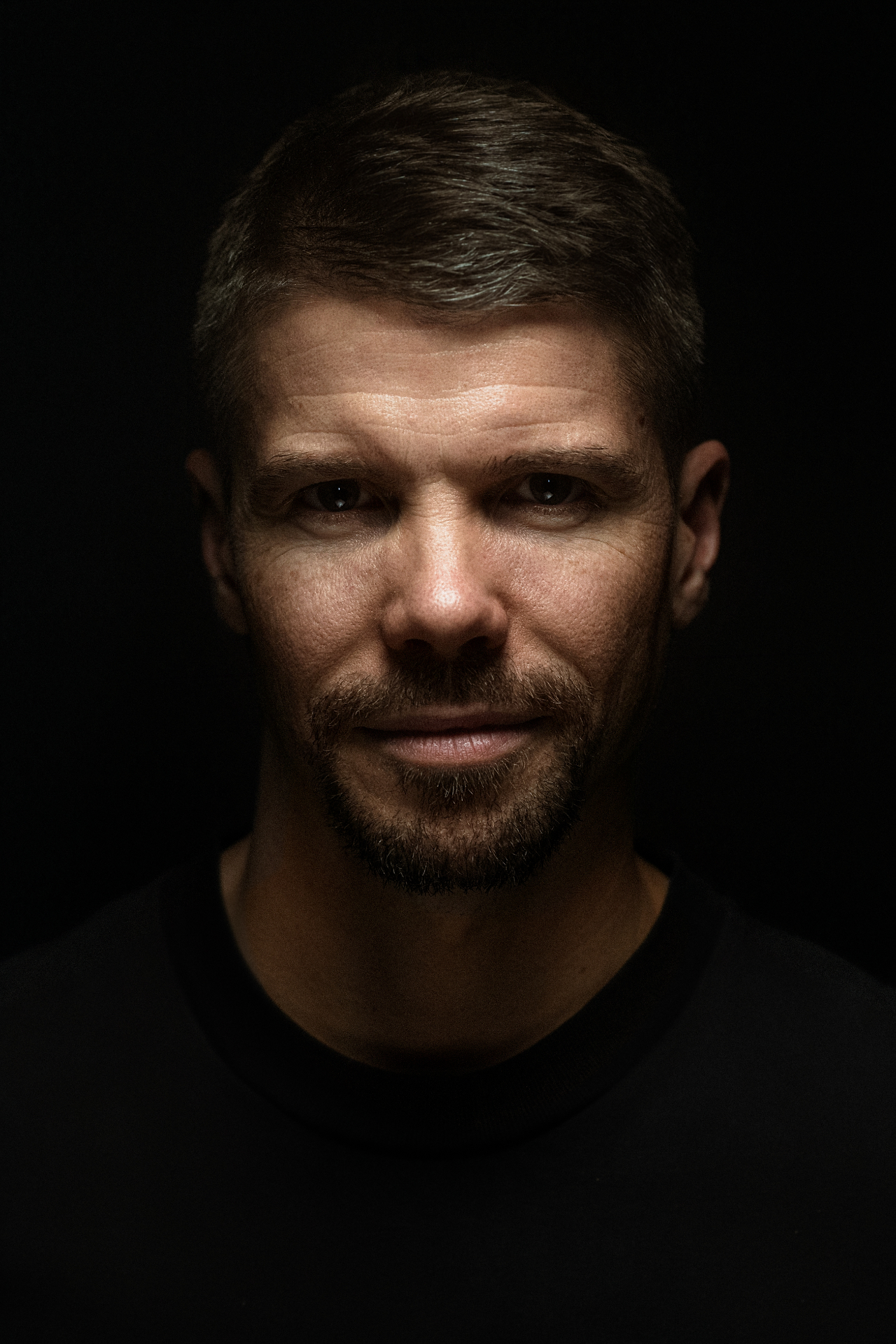
Marco Pasini
An entrepreneur since 2009. I know the patterns this programme is about first-hand — the head-driven, controlling operator who functions instead of living. Positive Intelligence was part of my own shift towards a more present, heart-led way of working.
For me Positive Intelligence is a way in, not an end point. It's the clearest route I know to seeing your own life differently: circumstances aren't what weigh us down — the meaning we give them is. That one shift moved more in me than everything I'd tried before it.
I bring more into the cohorts than the curriculum. Nervous-system work, breath and body, mindset work from my own practice. For thirty-eight years I lived almost entirely in my head — it was the body that finally taught me what regulation actually means. That runs through every session.
Today I work at the intersection of emotional resilience, leadership and self-regulation. As a certified Positive Intelligence coach I've guided founders, executives and couples through the programme.
“I don't fix anyone. I remind people who they already are.”
Three doors
Any of them is a good first step. Pick the one that fits.
Questions that come up
Programme & format
When is the next discovery workshop?
The next date isn't set yet. Pick ‘hear about the next discovery workshop’ in the form and you'll get the date and the sign-up link by email as soon as it's fixed. The cohort starts on 2 October — you can sign up for that independently.
How much time does this take?
One live session per week (60–90 minutes), around 15 minutes of app training a day and roughly an hour at the weekend for the learning module. The daily exercises fit into gaps: brushing your teeth, in the car, before a meeting. Deliberately built to fit a full life — including one with children.
What does a pod session actually look like?
We start with a short body-based exercise so everyone properly arrives. Then the theme of the week, framed briefly rather than lectured. Most of the time goes into real situations from your week — as a group and in pairs. We close with what each person takes into the next seven days.
Do I need prior experience?
No. We start at zero. If you've already worked with meditation, therapy or coaching, you'll find a structure here that organises what you have rather than replacing it.
What is the PQ app — and what happens after the year?
The app guides you through the daily exercises, holds the learning modules and makes your progress visible. Access is included for a full year, well beyond the programme: the seven weeks lay the foundation, the year builds the habit. After that it's your call whether to extend.
What if I miss a session?
You get the material, and we pick up what matters in the next session. The app keeps running either way, so you stay in rhythm.
Are sessions recorded?
The pod sessions aren't. What's in the room stays in the room — that protects the openness, yours and everyone else's. The learning modules in the app are available any time.
Evidence & how it works
How solid is the scientific grounding?
Honest answer: Positive Intelligence is a synthesis, not a method backed by a single randomised trial. Shirzad Chamine states he developed the model over roughly 30 years of work and data from more than a million people; a factor analysis condensed the patterns into ten saboteurs and five Sage powers. The building blocks themselves — cognitive reappraisal, self-compassion, attention regulation, interoception — are well studied in psychology and neuroscience. Positive Intelligence reports that the practice strengthens 17 of the 18 emotional intelligence competencies. What you get here is a well-built training system.
Isn't this just positive thinking?
No, and the difference is the whole point. Positive thinking paints over a feeling with a friendlier sentence. Here it runs the other way: first notice what's actually going on, then regulate the body, then consciously decide what meaning you give the situation. “Anything can mean anything” isn't a euphemism — it's an observation. Circumstances carry no meaning in themselves; we assign it.
How is this different from meditation or a mindfulness app?
Three things. The diagnosis: you're not working on calm in general, but on your specific patterns, which you've named first. The dose: one- to two-minute exercises several times a day, rather than one long sitting that's the first thing to go when it gets tight. And the group — new mental habits hold far better when others are walking the same road at the same time.
Why so much work with the body?
Because under stress the route through the head is closed. In fight-flight-freeze the amount of information you can consciously process drops dramatically. The figure often quoted is around 40 bits per second, against up to 100,000 in a regulated state — whether those numbers are exact matters less than the direction, which you know from your own experience. That's why every intervention starts in the body: breath, palms, feet, face. Thinking comes after.
Is progress measured?
Yes. Positive Intelligence works with a PQ score reflecting the ratio between constructive and sabotaging mental activity. You measure at the start, watch it move across the weeks, and can hold the final number against your own experience. Usually more telling than the score is the feedback from people around you — that arrives earlier.
What stays after seven weeks?
Three things participants name again and again. A vocabulary for saying what's happening in the moment. A handful of exercises that work in seconds. And a different reflex: the space between stimulus and response becomes noticeably wider. That's exactly why app access runs for a full year.
The group
How big is the group — and who's in it?
No more than ten people, so everyone genuinely gets room. The mix is deliberate: founders, executives, people from entirely different contexts, sometimes couples. That mix is where the value sits — you'll spot your own pattern in someone else first.
Do I have to talk about myself in front of the group?
You decide what you share. There's no round where everyone has to deliver. In practice most people open up after two or three weeks by themselves, because they notice the others are living the same thing. Until then, listening is enough.
What happens to what I share?
It stays in the room. No recordings, nothing passed on, not even anonymised. That applies to me as much as to everyone else, and it's the one rule the group commits to in the preparation call.
I've already done therapy or a lot of coaching. Is there anything left here?
Usually especially then. People who know themselves well often have plenty of insight and little tooling for the moment it tips. That's exactly where this starts: not another realisation, but a trained response. Several participants with long therapy histories describe it as the piece that was missing.
What if my partner is sceptical?
Then come to the discovery workshop and look at it without deciding anything. The programme depends on both of you wanting it — convincing someone and then signing them up doesn't work. Scepticism is a good start, by the way: sceptical partners are often the ones who move the most.
Investment & practicalities
What does it cost and what's included?
€1,490 plus VAT per person. That covers seven guided weeks with weekly pod sessions, PQ app access for a full year, the personal saboteur assessment with a debrief, and the closing session.
Can my company pay for this?
Yes, that's the normal case. You get an invoice to the company with VAT shown. How to treat it for tax is best clarified with your accountant.
When does the next cohort start?
Friday 2 October 2026. Seven weeks with weekly pod sessions, plus the closing session afterwards. We agree the exact times together as a group before we start.
What language is it in?
Cohorts run in German by default; English-language cohorts on request. The PQ app is mostly in English, and we work through the material together in the sessions, so you're never alone with it.
Is this therapy?
No. Positive Intelligence is mental fitness training. It doesn't replace psychotherapy or couples therapy and isn't intended to treat mental illness. If it becomes clear along the way that something else is more urgent, I'll tell you — and help with the next step.
Can we do this as a couple?
Yes. You go through the programme together, and that's precisely where the value sits: you get a shared vocabulary for the moments that would otherwise tip. The price is per person.
What if I start and realize it's not for me?
That's what the Arrival Guarantee is for: walk the first three weeks with us — if you then sense it's not your path, you get the full amount back. No justification, no form.